Skip to content

ConceptApp rescue & relaunch

Deskhaus: a coworking members app, rebuilt after rejection

What a rescue looks like: a members app built with an AI tool and rejected by Apple, checked, rebuilt in code and ready to relaunch, with desk booking, a door pass and an operator dashboard.

Try it on your phone

The brief

For: A coworking operator with three sites and 400 members

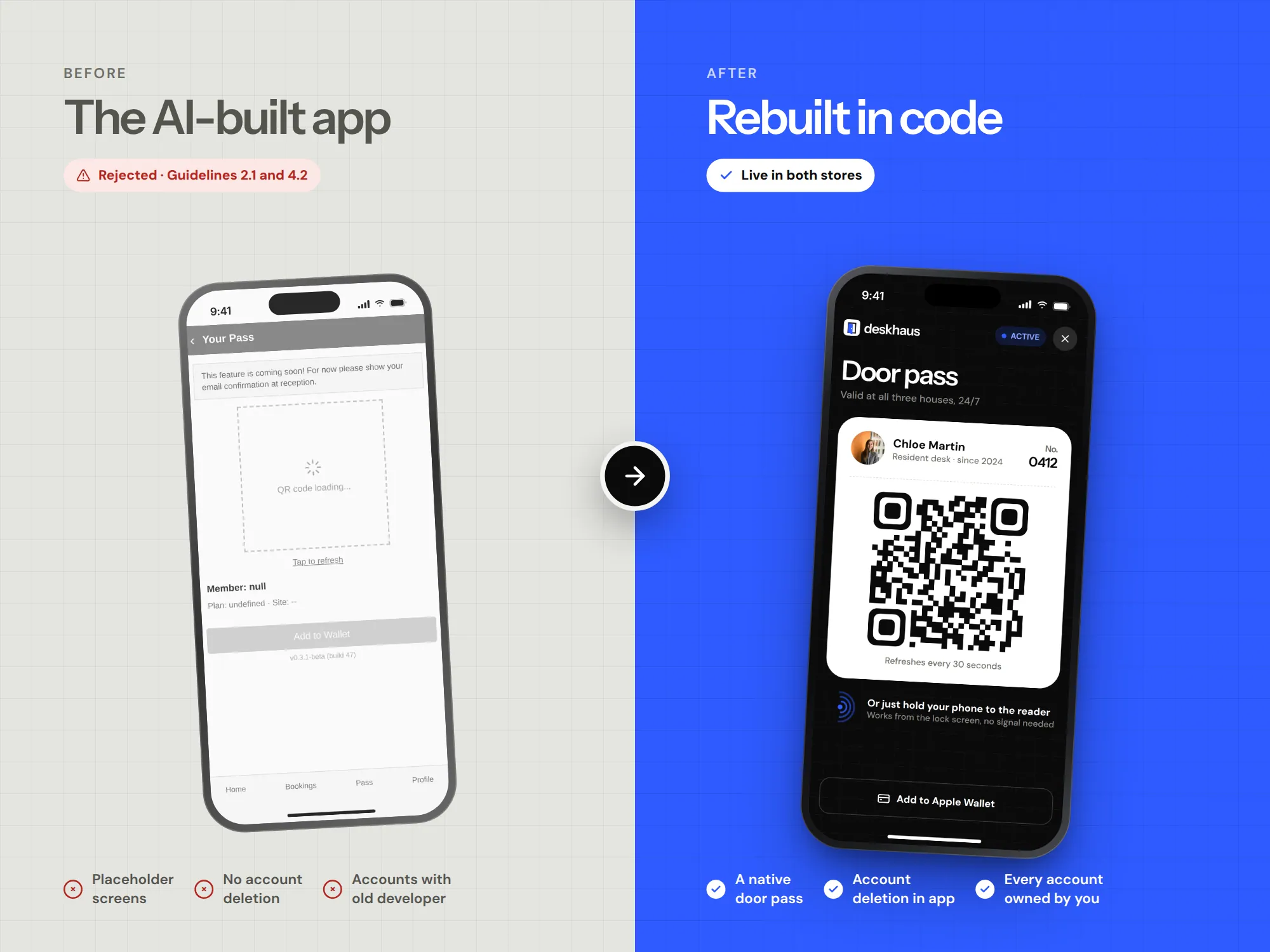
A coworking operator with three sites had a members app built with an AI tool. Apple rejected it twice: the door pass said "coming soon" and parts of the app were placeholders. The developer had moved on, and the store and database accounts were still in his name. Members were back to showing email confirmations at reception.

“Your desk, your door, one app.”

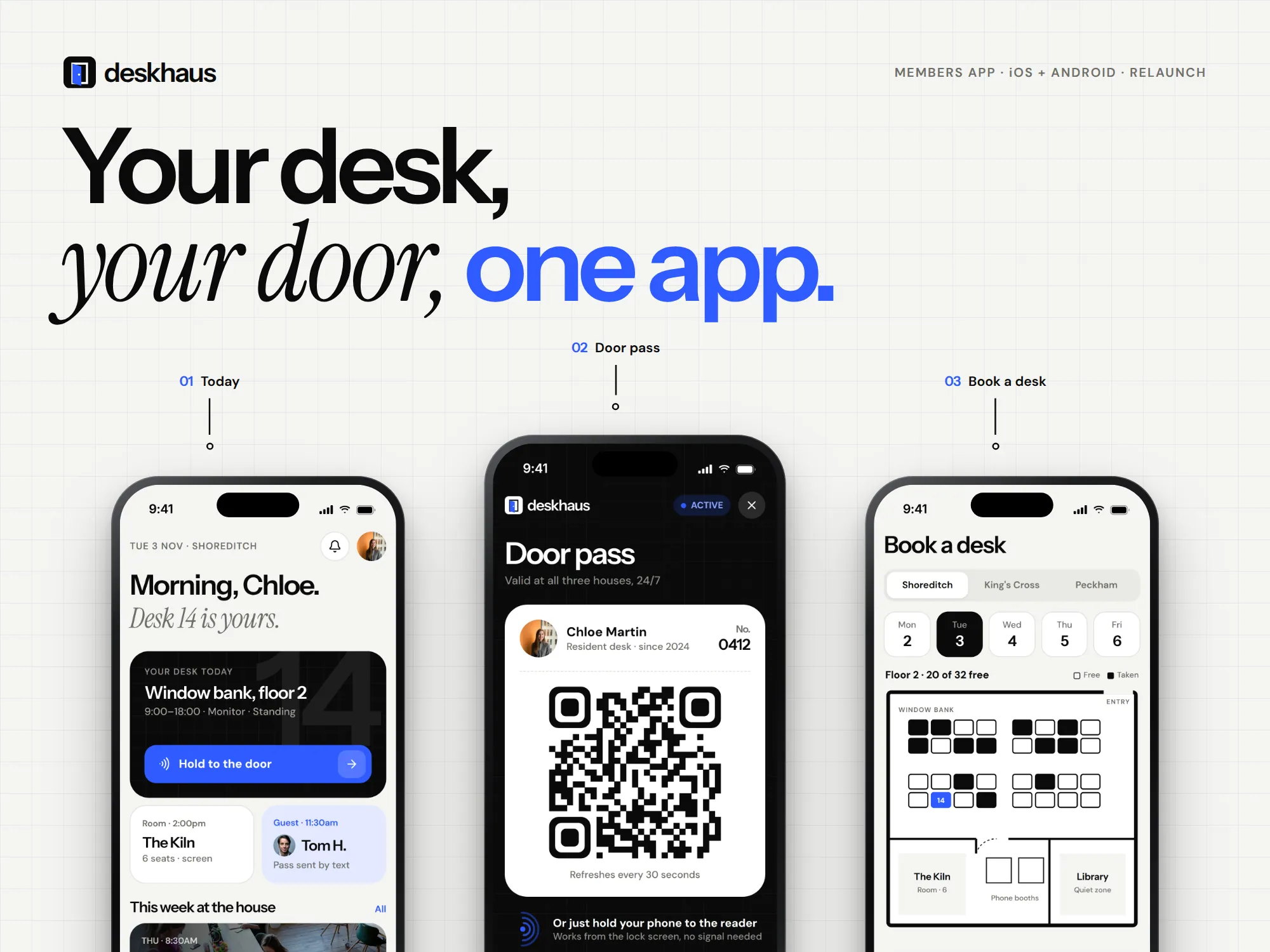
Deskhaus concept: the today, door pass and desk booking screens on three phones

Every main screen of Deskhaus.

Scroll sideways. Each screen is part of the fixed scope on this page.

How we'd build it

The scope we'd quote for Deskhaus today, as a fixed price paid in stages.

What we'd deliver
App Check · Members app · Operator dashboard
Platforms
iOS · Android · Web
Size
App Check, then Starter
Typical time
About 4–6 weeks

See pricingApp rescue

Deskhaus before and after: the rejected AI-built door pass beside the rebuilt one
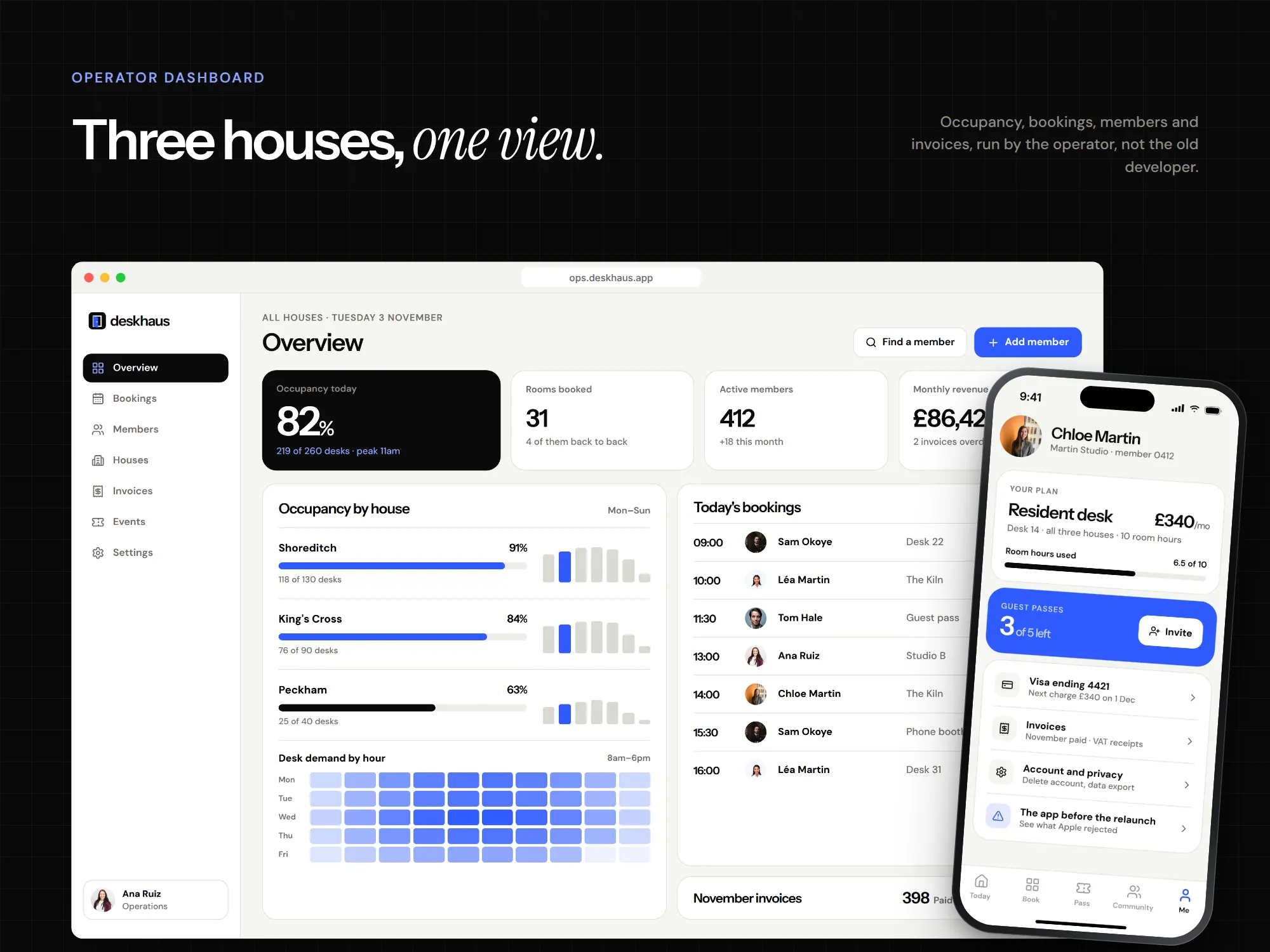
Deskhaus operator dashboard in a browser, with the member's plan screen

What we found in the App Check

  • Placeholder features. The door pass and the terms page said "coming soon". Apple rejects unfinished features under guideline 2.1, App Completeness.
  • A website in a wrapper. Most screens were web pages inside an app shell, with little that used the phone. That is what guideline 4.2, Minimum Functionality, is about.
  • No way to delete an account. Apple and Google both require it for any app with sign-up.
  • Accounts in the wrong name. The Apple developer account, the database and the domain were all held by the previous developer.
  • Live errors. Template tags such as {first_name} and "undefined" showed on screen when data was missing.

The answer was a rebuild: the fixes would have cost more than starting clean, and the code couldn't be handed to anyone else.

How it works

  1. Book. Members pick a house and a day, then a desk on a real floor plan, with free and taken desks at a glance. Rooms book the same way, against their monthly room hours.
  2. Arrive. The door pass is a code that refreshes every 30 seconds, or a tap of the phone on the reader. It also lives in Apple Wallet and works without signal.
  3. Bring a guest. Members invite guests from their monthly allowance. The guest gets a pass by text, and reception sees them on the day's list.
  4. Run it. The operator sees occupancy by house, the day's bookings, members, plans and invoices from one dashboard.

The hard parts

  • Taking the accounts back. The first week goes on moving the Apple, Google, database and domain accounts into the operator's own name, so nothing depends on the old developer again.
  • The door system. The pass talks to the access-control system the houses already use, through its documented API. Readers and locks stay as they are.
  • Moving the members over. About 400 members, their plans and future bookings come across from the old tool and are checked by hand before launch.
  • Passing review the first time. Native screens, account deletion, a reviewer login and accurate privacy labels go in from the start, so the resubmission isn't a third rejection.

What waits for version two

  • Member-to-member messaging and a members' directory with profiles.
  • Paying for day passes and extra room hours in the app.
  • A fourth house, with its own floor plans and pricing.

Week by week

WeekOn your phone
0App Check: what works, what Apple objected to, who holds which account, and one fixed price
1Every account moved into your name; first test build
2Every screen designed and signed off
3Desk and room booking working on real floor plans
4Door pass working on the readers at one house; members moved across
5Submitted to Apple and Google, with notes answering the earlier rejections
6Live in both stores

The design system

Every concept gets its own brand, so it looks like a product, not a template.

  • Cobalt#2F5BFF
  • Black#0A0A0A
  • Paper#F5F5F2
  • Haze#E3E9FF
  • Rule#E2E2DC
Display
Instrument Sans
Accent
Instrument Serif Italic
Interface
DM Sans

Questions

Is Deskhaus a real company?

No. Deskhaus is a concept app: a product we designed end to end to show how we take over an app someone else started, check it, rebuild it and launch it. The scope, weeks and price are what we'd quote for it today.

Do you always rebuild an app that was rejected?

No. The App Check comes first and gives one answer: fix it, launch it as it is, or rebuild it. Many rejections are fixed in days with a Rejection Fix or a Fix Sprint. A rebuild makes sense when the fixes would cost more than starting clean, as they would here.

What happens to our existing members and bookings?

They move across. We export users, plans and bookings from the old tool, load them into the new app and check them before launch, so members sign in with the email they already use.

More work

All our work
  • ConceptAI app

    Tallyo: Point. Measure. Quote.

    Scan a room with your phone, get a draft quote priced from your own rates, check it, and send it. The client accepts and pays a deposit from a link.

    Trader app + Client quote page + Admin · about 4–6 weeks

    Try it on your phone

Have an app in mind?

Tell us about it on a free 20-minute call. If we're not the right team for it, we'll say so.

Book a 20-minute callSend us a message

A reply within 1 working day. Your App Preview can start within 2.